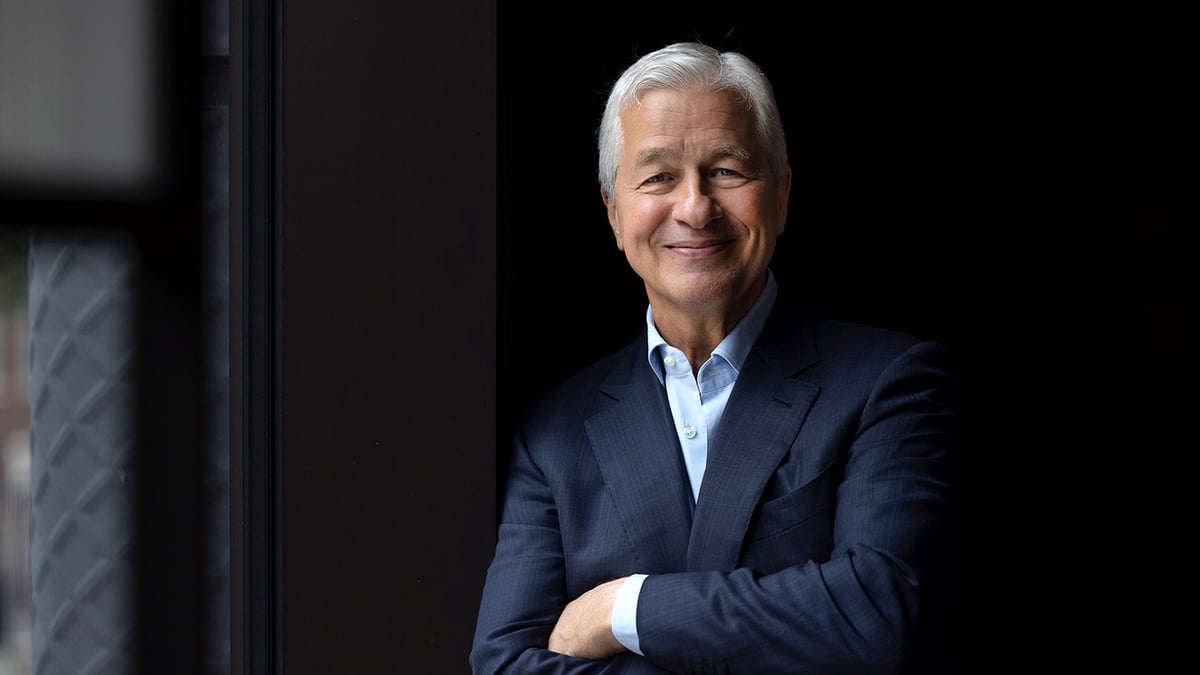
Jamie Dimon has been the CEO of JPMorgan Chase (JPM) since January 1, 2006, and has led the firm for over two decades. Despite discussions earlier this year regarding succession plans, Dimon has confirmed his intention to remain in the role for several more years.
Under Dimon's leadership, JPMorgan has achieved remarkable success, with stock performance significantly exceeding that of the S&P 500 (^GSPC).
Since Dimon assumed the CEO position, JPMorgan's stock has appreciated by approximately 730%. An initial investment of $10,000 in the company's stock at that time would now be valued at about $83,020. In contrast, the State Street SPDR S&P 500 ETF (SPY) has risen roughly 524% during the same period, turning a $10,000 investment into around $62,420.
The advantage of JPMorgan's performance becomes even more evident when dividends are included. The bank has consistently paid dividends for 29 years, providing direct cash payouts to shareholders throughout Dimon's tenure, and has a 15-year history of annual dividend growth.
Considering dividends, JPMorgan has achieved a total return of approximately 1,320% since Dimon became CEO, transforming a $10,000 investment into about $141,540. In comparison, the total return of the State Street SPDR S&P 500 ETF over the same timeframe is around 811%, resulting in a $10,000 investment growing to $91,400.
Dimon's announcement of his plans to continue as CEO for the foreseeable future is reassuring for shareholders. He has successfully navigated the company through the 2008 financial crisis, challenges related to regional bank failures, and periods of significant market volatility.
Recognized as a skilled leader, Dimon is known for his analytical perspective on the banking sector, stock market, and global economy. His market insights are highly regarded within the investment community, making his eventual succession a critical consideration for JPMorgan's future.