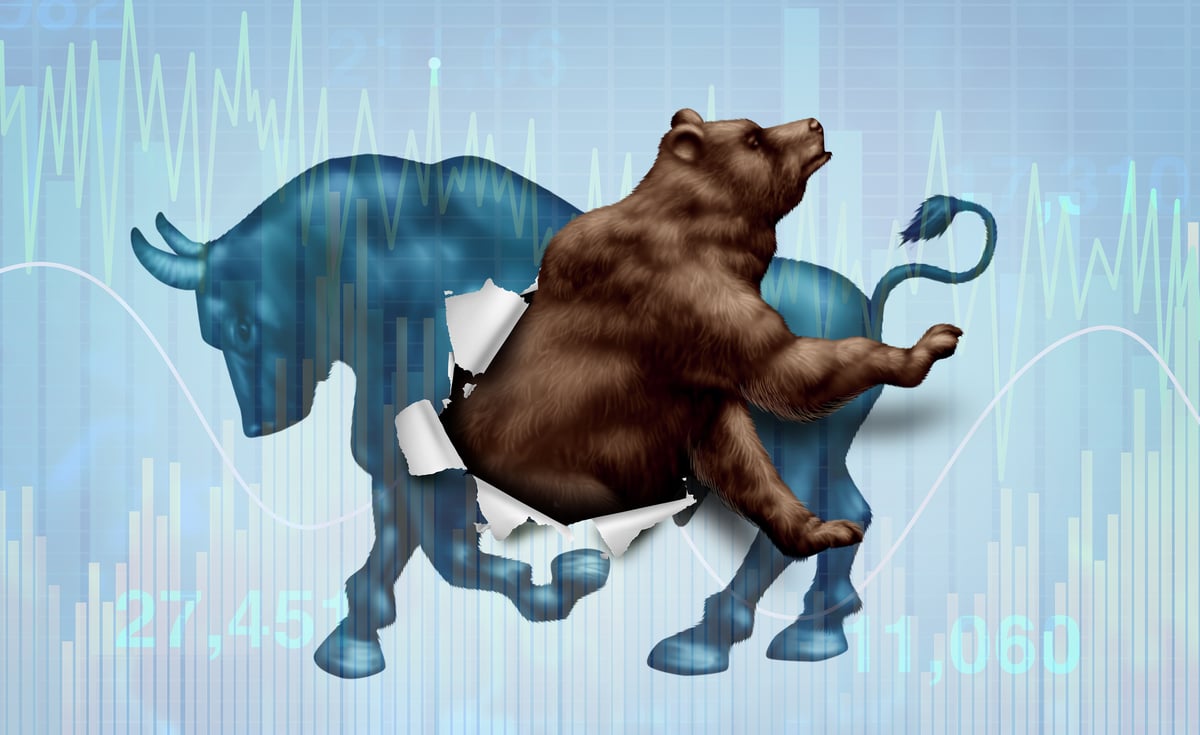
Recent warnings of a possible stock market crash have been issued by notable investors, including Michael Burry and Ray Dalio.
Michael Burry, known for predicting the housing market collapse, expressed concerns about an impending burst of the AI bubble. He stated on X, "The stock market is quite obviously in its first stage of grief, denial. Per 2000 and 2008, this stage lasts 6-9 months." Burry has been actively shorting stocks such as Nvidia, Palantir Technologies, and Micron Technology.
Ray Dalio, another prominent investor, also raised alarms about the AI boom, suggesting it exhibits classic bubble characteristics. Speaking at the Forbes Global CEO Conference in Singapore, he warned that rising debt for AI infrastructure and increasing interest rates could lead to a significant market downturn. Additionally, he mentioned on Bloomberg News that cashing out investments, a wealth tax, or loan repayments could further trigger a market collapse.
Market analysts have noted that the S&P 500 (^GSPC +0.59%) is currently trading at historically high valuations. The S&P 500 cyclically adjusted PE (CAPE) ratio has reached 40, a level seen only once before, just prior to the dot-com bubble's burst. This valuation metric, developed by Yale economist Robert Shiller, averages ten years of inflation-adjusted earnings to mitigate fluctuations from business cycles.
Furthermore, the Buffett Indicator, a valuation measure favored by Warren Buffett, has also hit an all-time high. This indicator assesses the total value of the U.S. stock market in relation to the country's gross domestic product (GDP), with a reading above 120% considered overvalued; currently, the ratio exceeds 238%.
For investors concerned about a potential market downturn, legendary investor Peter Lynch offers valuable advice. Lynch managed Fidelity's Magellan Fund from 1977 to 1990, achieving an impressive average annual return of over 29%.
In a September 1995 essay for Worth magazine, Lynch famously stated, "Far more money has been lost by investors preparing for corrections or trying to anticipate corrections than has been lost in corrections themselves." He emphasized the errors investors make when hedging with options or reducing their positions.
Lynch illustrated that if an investor had contributed $2,000 annually to the S&P 500 since 1965, their average annual return would be 11%. Even if they invested at market peaks, the return would only slightly decrease to 10.6%. He concluded, "Whether your timing is good or bad. What matters is that you stay invested in stocks."
Lynch's approach encourages investors to disregard market correction predictions and maintain a disciplined investment strategy, ideally through dollar-cost averaging with index-focused exchange-traded funds (ETFs) like the Vanguard S&P 500 ETF (VOO +0.61%) or Invesco QQQ Trust (QQQ +0.49%).
These ETFs align with Lynch's philosophy of not selling winning stocks too early, as their market cap-weighted structure naturally increases the proportion of outperforming stocks within the fund. While it's common to feel anxious with market crash predictions from renowned investors, Lynch's message remains clear: time in the market is more beneficial than attempting to time the market.