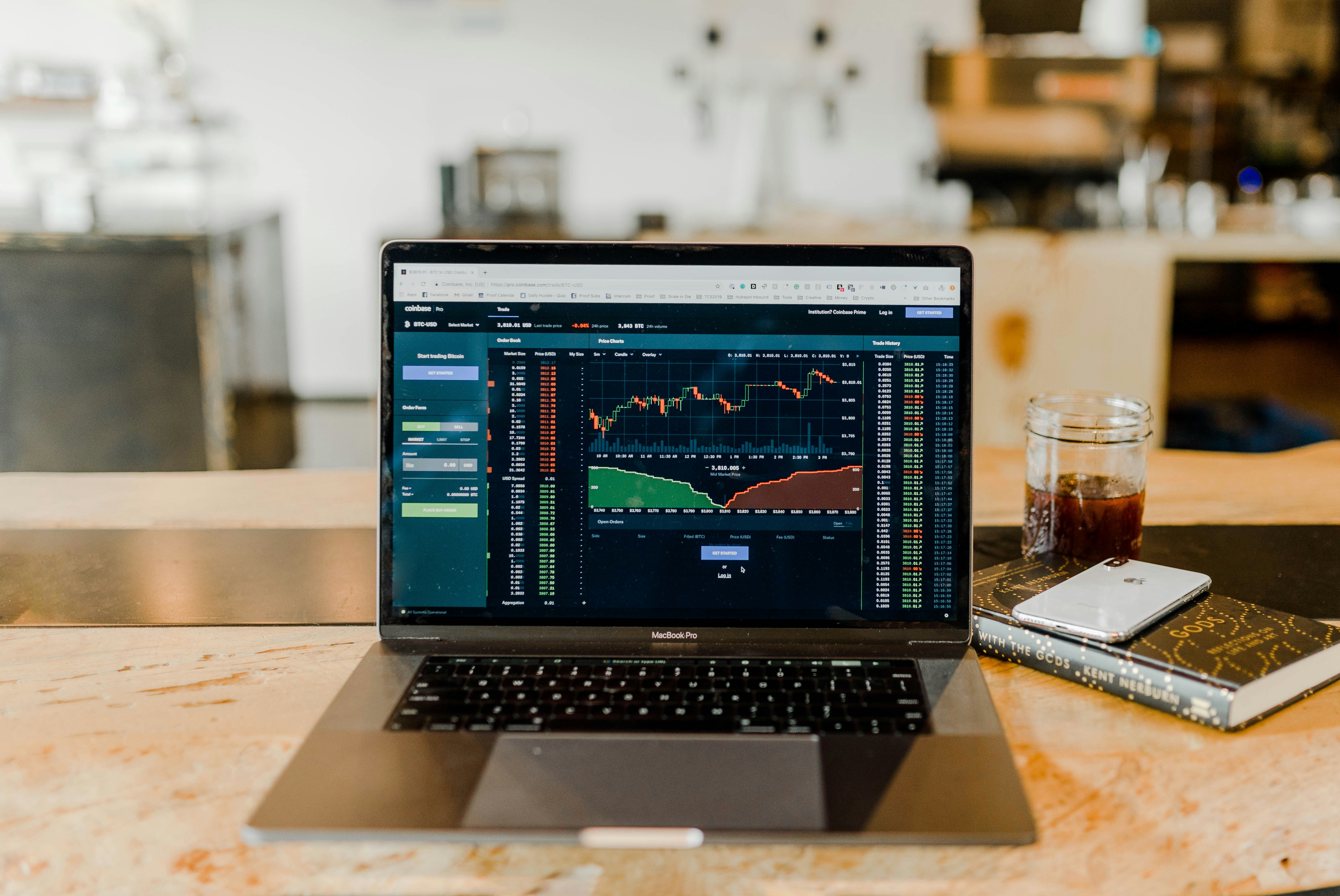
An AI trading portfolio can help you research the market faster. It can't tell you what the market will do next. If you're new to this, that gap is the most important thing to understand before you put money behind any AI tool.
This guide covers what an AI trading portfolio is, how it works, the benefits and risks, and the steps for trying one without risking real money.
What is an AI trading portfolio?
An AI trading portfolio is a collection of investments that artificial intelligence helps analyze or manage. Depending on the platform, it might hold individual stocks, exchange-traded funds (ETFs) or other instruments. The AI might process market data, flag possible trades, watch your holdings or place orders for you.
That last part is where platforms differ. An analysis tool gives you information. An automated trading system can place orders when conditions you've set are met. Know which one you're dealing with, because the level of automation changes your risk.
Visual tools help too. A Nasdaq-100 heatmap shows how every stock in the index is moving at a glance. If heatmaps are new to you, start with our guide on how to read a stock heatmap.
How does an AI trading portfolio work?
The details vary, but most platforms combine market data, analytical models, trading rules and portfolio monitoring. In practice that comes down to four jobs.
1. Collecting and analyzing market data
AI tools look at prices, trading volumes, historical returns, company financials, economic indicators and news. Machine learning can spot relationships across huge datasets that would take a person days to check. Some tools also use language models to summarize reports.
The output is only as good as the data behind it. If the information is wrong, stale or irrelevant, the analysis will be too, so check the important findings yourself.
2. Flagging possible trades
After analyzing the data, a system may spot patterns linked to price trends, volatility or momentum and produce signals. A signal means "look closer at this," not "buy this." Signals fail, especially when an economic announcement, a company surprise or a shift in investor mood moves prices.
3. Building and balancing the portfolio
Next comes deciding what to hold and how much of each. AI tools can compare allocations, show your exposure to different industries and point out positions that add a lot of risk. A portfolio packed with a few tech stocks, for example, can get hit hard by one sector-wide event. Diversification reduces that kind of concentration risk, but it can't remove the chance of losing money.
4. Executing trades and monitoring results
Some platforms send signals and wait for your approval. Others connect to a brokerage account and place orders automatically. Automation follows rules without you clicking every time, but it also opens the door to unintended trades, technical failures and strategies that behave differently than you expected. Before you turn it on, find out how orders are placed, whether you can review or cancel them, and what happens if the system goes down.
Key benefits of an AI trading portfolio
AI can help in several places. How much it helps depends on the platform and on how well you can read the results.
Faster research. AI can organize reports, compare indicators and summarize what deserves a closer look. That gives beginners a more structured research process. Faster isn't the same as better, though, and you still need to understand why a trade makes sense.
More consistent decisions. Fear and excitement push people into bad trades. Rules apply the same criteria every time. But consistency doesn't make a strategy profitable, and badly designed rules just repeat bad decisions.
Easier monitoring. Tracking holdings across sectors or accounts is tedious. A dashboard such as the Odin500 market dashboard gives you a central view. Check which metrics it covers and how often the data updates.
Risk analysis. AI can measure historical volatility, correlations between holdings and sector exposure. That can reveal risks you'd miss by looking at single stocks. Historical risk numbers can't cover every future event, though.
Less manual work. Screening, summaries and portfolio math can be automated, which leaves more time for strategy. You're still responsible for the tools you use and the decisions made in your account.
How to build an AI trading portfolio: 7 steps
A clear process keeps beginners out of unnecessary complexity.
Step 1: Define your goals
Decide what you want. You might want to learn how markets work, try short-term trading or use AI to support long-term research. Short-term trading and long-term investing carry different risks, so know which one you're doing.
Step 2: Set a realistic budget
Use only money you can afford to put at risk, and never borrow it to try an unfamiliar strategy. Count the costs too: subscriptions, commissions, transaction costs and taxes. A platform that advertises low trading fees may still charge in other ways. Minimum deposits vary by provider, so there's no universal starting amount.
Step 3: Research the platforms
Work out what a service actually does: research summaries, trading signals, portfolio analytics or automated execution. Those are different things and shouldn't be treated as interchangeable.
If you're a US investor, check who is behind the platform and whether it's registered. The SEC, FINRA and your state securities regulator all have lookup tools. Be wary of any AI trading pitch that guarantees returns, even from a registered firm.
Step 4: Choose investments you understand
An AI tool may suggest stocks based on its models. Before you act, look into the company yourself: its financial position, its industry, its valuation and its risks. A ticker report and sector data are good places to start. Don't buy something just because an algorithm ranked it highly.
Step 5: Set allocation rules
Decide how to split your money. Avoid putting too much into one company or industry unless you understand the risk. Diversification helps, but it isn't a guarantee, and different assets can fall together when markets get stressed.
Step 6: Test your strategy with paper trading
If you can, practice with a simulated portfolio before risking real money. You'll see how signals work, how orders behave and how a strategy holds up in different conditions. Just remember that simulated results can differ from real trading because of transaction costs, execution delays, liquidity and the way real losses feel. Odin500's virtual portfolios are one place to practice, and we cover them below.
Step 7: Monitor and review
Track your results over time and include trading costs. Check that you're following your own rules and that your holdings still match your goals. Don't rewrite your approach after every small market move. A regular review helps you tell a real weakness from ordinary short-term noise.
AI trading strategies beginners should know
Learn how each approach works before you decide whether it suits you.
Trend following. The goal is to catch sustained moves up or down, using historical prices, moving averages and similar indicators. These strategies can struggle when markets move sideways or reverse suddenly.
Momentum. These strategies favor assets with recent price strength or weakness. Momentum can change fast, and a stock that just rose can drop sharply, so look at the downside as well as the recent gains.
Rule-based trading. Predefined conditions decide when to enter or exit a trade. The rules should be simple enough to understand and tested carefully. Automation can multiply the damage from a bad rule by placing several trades before you notice.
Diversified portfolio strategies. Some tools show how holdings interact, so you can avoid concentration and see how risk changes when you add or remove a position. Diversification isn't a trading signal. It's one part of managing exposure.
AI-assisted vs. traditional portfolio management
Both approaches can use the same financial information. They differ in how research and decisions get made.
Factor | AI-assisted trading | Traditional approach |
|---|---|---|
Research | Processes large datasets and organizes information quickly | Relies more on manual research and established methods |
Decisions | May generate algorithmic signals or recommendations | Relies on investor judgment or a financial professional |
Automation | May support automated monitoring or trade execution | Usually more manual, depending on the service |
Monitoring | Frequent data updates and alerts | Scheduled reviews and manual tracking |
Limitations | Depends on data quality, model design and system reliability | Time-consuming and open to human bias |
Neither is automatically better. AI can process information at scale, while human judgment can add context a model misses. Judge the specific service, not the technology label.
Risks beginners should know about
The limits of AI trading matter as much as the benefits.
Inaccurate data. Wrong or outdated information leads to misleading signals. Check important figures against reliable sources.
Changing markets. A strategy that worked before can fail when volatility, interest rates or investor behavior shift.
Technical failures. Software outages, wrong settings and execution problems can hurt automated systems.
Overtrading. Frequent trades add costs and tempt you to overreact to short-term moves.
Security. Unverified platforms can expose you to account takeovers, data misuse and scams.
Misleading profit claims. No AI system can guarantee returns.
That last risk is a real enforcement issue, not just a warning. In January 2024 the SEC, FINRA and NASAA issued a joint investor alert about fraud tied to the claimed use of AI. It specifically warns about trading systems that promise they can't lose. The SEC has also charged firms for false AI claims. In one case, Rimar Capital was accused of falsely presenting itself as an AI-driven trading platform, and it raised almost $4 million from 45 investors. A confident pitch and impressive technology don't make a platform trustworthy.
How to measure AI trading portfolio performance
Watching the account value go up isn't enough. Look at several measures:
Total return: how the portfolio performed over a set period, including income and price changes.
Benchmark comparison: how it did against a suitable index.
Volatility: how widely returns swung.
Maximum drawdown: the biggest peak-to-trough drop over a period.
Trading costs: commissions, spreads, subscriptions and other expenses.
Risk-adjusted performance: returns relative to the risk taken.
Judge a strategy over a long enough period and across different market conditions. Short-term gains don't prove a system is reliable. Odin500 says the same about its own AI portfolios: a few strong weeks say very little, and results should be judged over a longer record. At the time of writing, the top ten on the AI portfolio leaderboard all had track records under three months.
How to choose an AI trading platform
Before you open an account, look at what it does, what it costs and whether you can trust it.
Look for a clear explanation of how recommendations are generated and what data the model uses.
Check whether the provider separates simulated results from live trading performance, and whether it's open about its limits.
Review every fee: subscriptions, trading charges and anything else.
Read the security and privacy policies, and check what permissions you'd have to give to connect a brokerage account.
If the platform automates trading, find out how orders are triggered, what controls you have and how to pause it.
Verify the provider's regulatory status through official sources.
Common mistakes to avoid
Assuming AI predictions are always right.
Investing money you need for essentials.
Trading something you don't understand.
Judging returns before you've counted fees.
Relying on a single stock, signal or source.
Confusing simulated results with real-world results.
Sharing financial or personal details before researching the provider.
Changing your strategy after every short-term swing.
These habits can't remove investment risk, but they make your process more disciplined.
Try AI portfolios without risking real money
Paper trading is the safest way to get a feel for all this. On Odin500, every AI portfolio is simulated. Fills are priced against daily closing data, and there's no broker connection or real capital involved.
The AI portfolios work like this: at each rebalance, the model pulls the index constituents along with their Odin signals, can check recent news and the latest closes, and then sets its holdings. It can't invent a ticker, price or signal. Those signals come from daily price history, so the books behave more like systematic technical trading than fundamental stock picking. The signal methodology page explains how they're built.
You can watch how Claude, ChatGPT, Gemini and Grok portfolios compare on the AI portfolio leaderboard, or line them up with the compare page. Then build your own. Virtual portfolios are free with an Odin500 account, and you can trade by hand, automate entries and exits from Odin signal rules, and set position limits.
Conclusion
An AI trading portfolio uses artificial intelligence to support market analysis, trading decisions, portfolio monitoring or automated orders. For beginners, that can make research more efficient and give you a clearer view of what the market is doing.
What it can't do is predict every move, remove losses or guarantee profits. Data quality, strategy design, platform security, costs and your own risk management all shape the result. Start by learning the basics, set clear goals, research providers and test with paper trading. Then review your results honestly. A thoughtful process beats relying on the technology alone.
Frequently asked questions
What is an AI trading portfolio?
It's a collection of investments analyzed or managed with help from artificial intelligence. Depending on the platform, AI may support market research, trading signals, portfolio monitoring or automated trading.
Is AI trading suitable for beginners?
It can help beginners organize research and learn about market patterns, but you still need to understand the risks and check the recommendations. Starting with education and simulated trading lets you get familiar with a strategy before you risk real money.
Can AI trade stocks automatically?
Some platforms can place trades automatically based on rules or model signals. Others only provide analysis or recommendations. Before you enable automation, understand the platform's permissions, execution settings and risk controls.
How much money do you need to start?
It depends on the platform's minimum deposit, the investments it supports and its fees. There's no universal amount. Only invest money you can afford to lose without hurting your essential finances.
Can I practice AI trading without real money?
Yes. Paper trading or a virtual portfolio lets you practice without risking capital. On Odin500, virtual portfolios are free with an account.
Is AI trading profitable?
It can produce gains or losses. Results depend on the strategy, market conditions, data quality and costs. Past performance and AI forecasts don't guarantee future returns.
What is the biggest risk of AI trading?
Leaning too heavily on model recommendations without understanding their assumptions and limits. Bad data, sudden market changes, technical errors and overtrading can also cause losses.
How can I evaluate an AI trading platform?
Review its features, methodology, pricing, security, performance disclosures and regulatory status. Verify who runs it, and be cautious of guaranteed-return claims or pressure to deposit money quickly.
Can AI guarantee stock market returns?
No. Stock prices respond to uncertain events and changing conditions. AI can analyze information and spot possible patterns, but it can't guarantee profits or remove the risk of losing money.
This article is for educational purposes only and is not investment advice. Investing involves risk, including the loss of principal. Odin500 portfolios are simulated, and past performance does not guarantee future results.